Driving theory questions
This is an old question that is no longer in use.
Images may be missing and the information may be dated.
Are you permitted to drive faster than 50 km/h after the white and blue sign if you deem it appropriate?
The sign indicates:

Recommended lower speed (E11)
”The sign indicates a stretch of road or an area where specific measures have been taken or where conditions are such that it is advisable to drive at a lower speed than the maximum permitted speed. The recommended lower speed is indicated on the sign.”
Note the words “advisable” and “recommended”. These words signify that this action is not compulsory. If it would have been compulsory to stay under 50 km/h, what then is the difference between this sign and a regular round speed sign (C31)? Nothing in that case, which would mean that E11 is completely unnecessary.
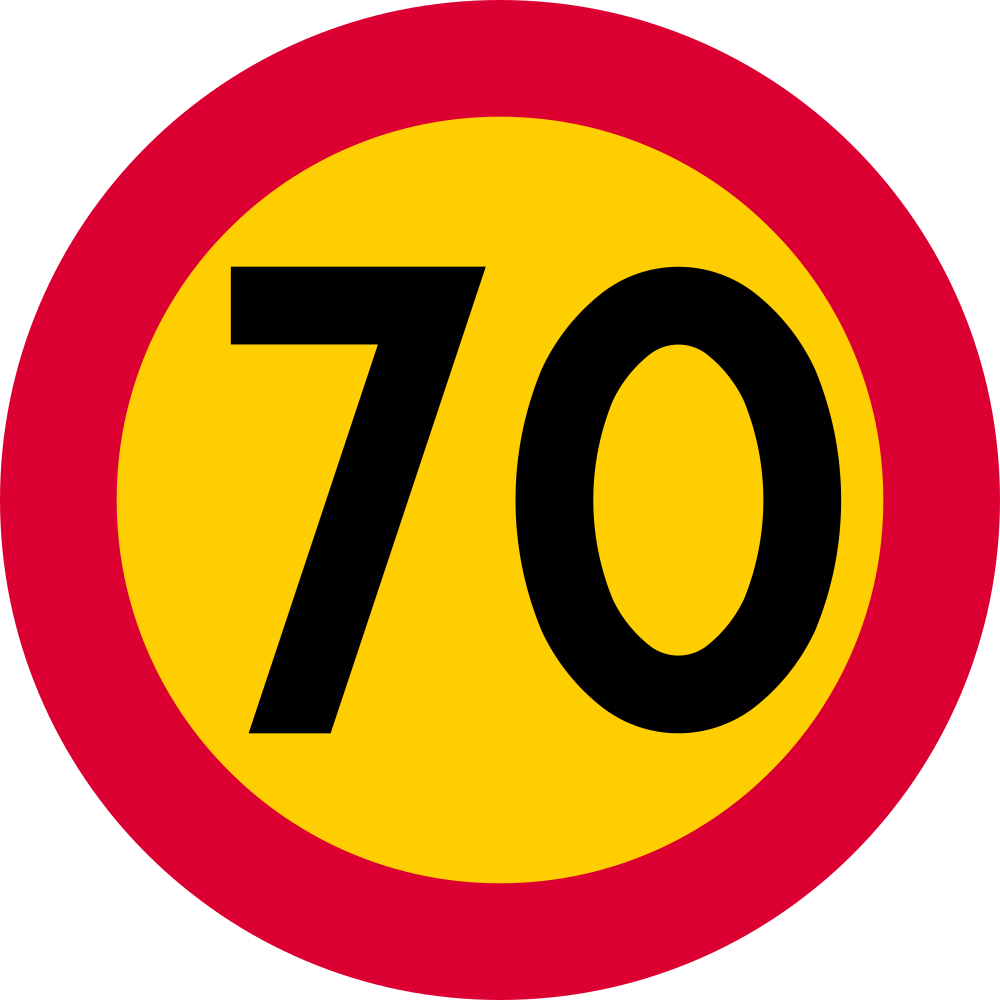
Speed limit (C31)
”The sign indicates that it is prohibited to drive a vehicle faster than the speed indicated on the sign.”
Therefore:
- E11 (square blue/white) = it is not advisable to drive faster, but you may do so.
- C31 (round yellow/red/black) = it is illegal to drive faster.

Körkortonline.se offers driving licence theory tests. This is an example of an explanation of a test question. English theory test (free demo), Swedish theory test (free demo).
More examples of explanations:
- When does the blue and white 50 sign cease to apply?
- You are driving the car from which the picture is taken. How should you act?
- How should you act if you are behind this car?
- You are heading to Borensberg S. Should you turn left or continue straight in the junction ahead?
- What do the signs on the right indicate?
- What rule applies at this junction?
- Which road is considered the main road when there are no signs or signals?
- What do these road signs mean?
- When does the warning cease to apply?
- Which statement is true regarding the distance between these cars, if they are moving at approximately 70 km/h?
- Which alternative describes the greatest dangers in the situation depicted in the photo?
- Is the vehicle travelling in the lane from which the picture is taken permitted to go over into the oncoming lane at point A to overtake another car?
- The car has stopped to wait for the road to clear. What do you think about its positioning?
- You are driving the car from which the picture is taken. Are you allowed to turn right at A?
- What is the type of road in the picture called?
- What is about to happen?
- What does this road sign mean?
- What do you think of this car’s placement on the road?
- You are going to Malmö and have a choice between two routes. Route A is 50 km and route B is 57 km long. Which option is true?
- What should you pay particular attention to when you see these road signs?
Category:
- Driving theory questions: Vehicle
- Driving theory questions: Environment
- Driving theory questions: Traffic safety
- Driving theory questions: Traffic regulations
- Driving theory questions: Individual circumstances
- Driving theory questions: Road signs