
Theory test
What is indicated by the three mandatory signs to the left of the picture?
The mandatory signs referred to mean:
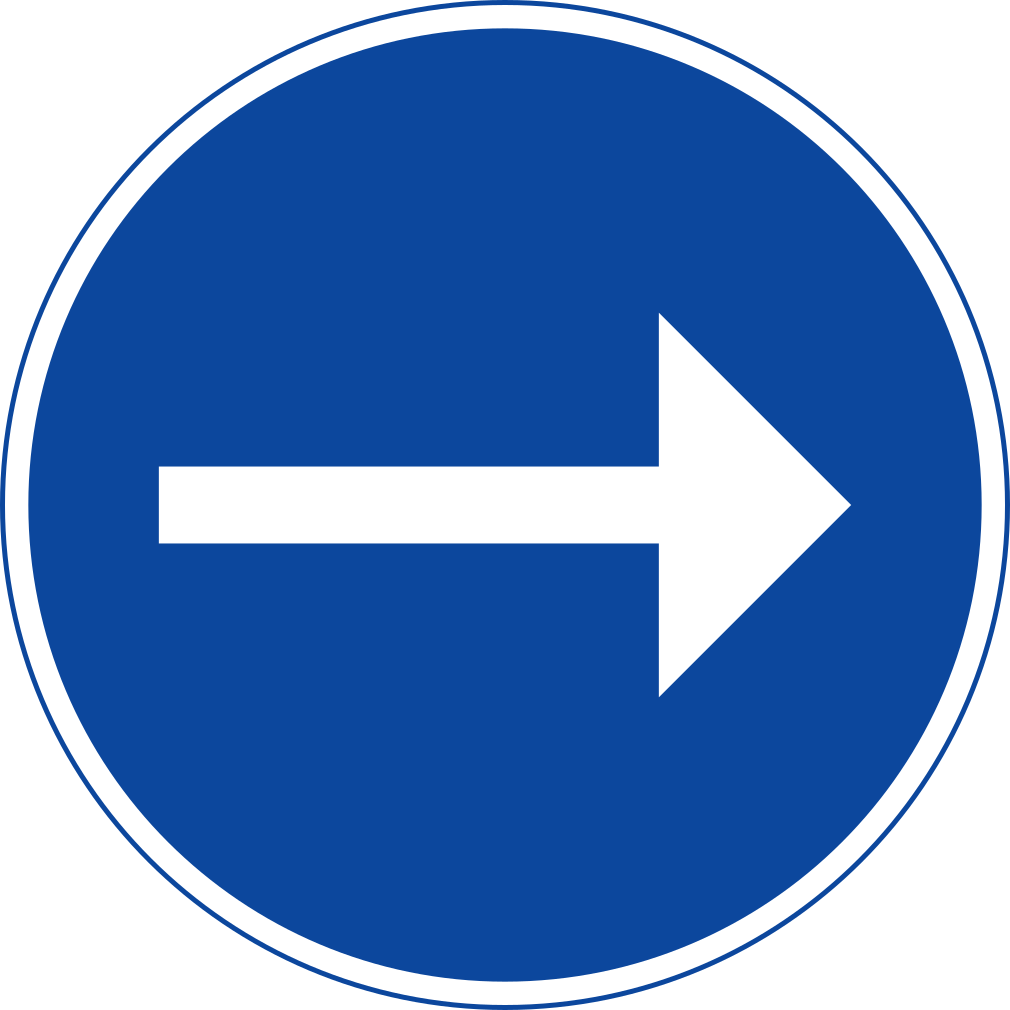
Direction to be followed (D1)
”The signs indicate that the vehicle may only be driven in the direction of the arrow or, in the case of two arrows, in either arrow’s direction. The symbol is adapted to the conditions of the location.”
The rectangular signs with several arrows are arrow markers (X1) and not mandatory signs, which were the subject of the question.
Roundabouts are never designed so that you must turn off at a certain exit road, you can always drive around if you want.
This is an example of one of the driving theory questions at Körtkortonline.se. There are two languages: English (free driving licence test), Swedish (free driving licence test)
More examples of theory questions:
- You are driving the car from which the picture is taken. What is the greatest risk facing you?
- How can you drive to get to road 55?
- The cars in the picture are driving at 90 km/h. What do you think about the distance between them?
- The black car to the left of the picture has just carefully passed the cyclist in the roundabout. What do you think about the manoeuvre?
- What is true regarding the connection to E20?
- You are driving the car from which the picture is taken. How should you act?
- You want to drive straight on in the left lane instead of turning right. What does the sign say about the place or places to which the road continuing straight on leads?
- You are driving the car from which the picture is taken and see the overtaking being performed. How should you act?
- Why is there a yellow prohibitory line painted at this location?
- What does the road sign to the far right of the picture mean?
- You are driving the car from which the picture is taken. May you turn off towards Herrängen in some way?
- What does the traffic signal mean?
- You are driving the car from which the picture is taken. What rule applies in the two upcoming junctions?
- What does the bicycle sign in the picture mean?
- Is it permitted to overtake the moped in conjunction with the pedestrian crossing?
- You are driving the car from which the picture is taken. Which of the following is true?
- The temperature is 2°C and it is splashing under the car. For what road conditions should you adapt your turn out onto the intersecting road?
- What is the greatest risk with steering out onto the hard shoulder in the snow?
- You are driving on a road at 40 km/h and do not hear any slush spray under the car. What is this a sign of?
- In which track should you position the wheels?
Category:
- Theory test: Vehicle
- Theory test: Environment
- Theory test: Traffic safety
- Theory test: Traffic regulations
- Theory test: Individual circumstances
- Theory test: Road signs


